Inheriting an Apartment: Protecting a Spouse’s Home and Preventing Disputes Between Children
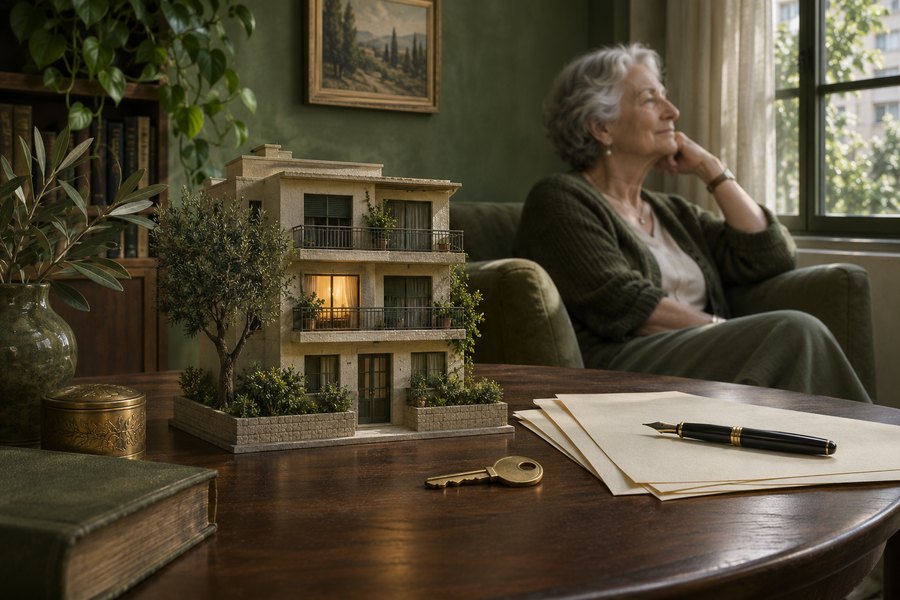
Inheriting an apartment: how to protect a spouse's home and prevent a dispute between children
75% of an apartment: protecting the surviving spouse
They had spent almost their entire lives together.
They raised two sons. Bought an apartment. Dreamed of a peaceful old age.
Then her husband died.
There was no will. Why make one? There was a wife and children. Everything would stay in the family…
If the spouses owned the apartment in equal shares, then after the husband's death, under Israeli law:
75% goes to the wife. 12.5% to one son. 12.5% to the other.
What could there be to worry about?
But one day, one of the sons says:
“Mom, I need money. Let's sell the apartment.”
“Son, where will I live?”
“Mom, you own 75%. You'll get your money.”
“I own 75% of the apartment. But I only have one home…”
This is where a problem arises that many people do not even anticipate.
Even with just 12.5% of the apartment, a son is entitled to seek dissolution of the co-ownership — פירוק שיתוף.
In certain circumstances, this may end with the apartment being sold.
Yes, the law provides certain protections for a widow's right to reside there. But there is no unconditional guarantee that she can remain in her home forever.
And the most painful part?
The son is not necessarily a bad person.
He simply wants to receive his inheritance.
To him, it is a 12.5% share in real estate.
To his mother, it is the home where she has spent her life.
What do I recommend?
Do not leave these questions to the heirs' discretion.
Think ahead about a will that protects not only the children's interests but also the surviving spouse's right to live in the home.
Consider mutual wills and specific provisions protecting the home.
Above all, discuss these issues together while you still have the opportunity.
An apartment shared equally by two brothers: what if the heirs cannot agree?
“I have two sons. Both are my own, and I love them equally. I want to leave them my apartment in equal shares.”
“What will they do with the apartment?”
“Well, that's up to them. They'll work it out.”
“What if they cannot agree?”
“Oh, come on! They're brothers!”
And their mother truly believed that.
Her sons had always got along very well. They helped each other and dealt with family matters together. There had been no serious disagreements between them.
Their mother made a will and left with peace of mind.
She had hurt no one. Deprived no one. Everything was fair.
But there was one thing she had never even considered.
Years passed. Their mother died.
The apartment went to her sons. Half to each.
One day, a conversation began.
“Let's sell the apartment. I need money now.”
“Why sell it? Let's rent it out and earn an income.”
“But I need the money now!”
“And I don't want to sell Mom's apartment!”
Suddenly, two brothers who had got along throughout their lives found themselves on opposite sides of the same issue.
No one had deceived anyone. No one had received more than the other. And neither had intended to quarrel.
They simply had different plans.
But there was only one apartment.
What happens next?
Negotiations. Arguments. Hurt feelings.
Sometimes, court.
Under Israeli law, in certain circumstances, a conflict like this may end in the sale of the apartment and division of the proceeds, even if one brother objects.
Could this have been considered beforehand?
Yes.
When making her will, their mother could have discussed with her lawyer not only who would inherit the apartment but also what should happen if her sons could not agree.
For example, she could have provided for a sale procedure, the possibility for one heir to buy out the other, a method for determining the apartment's value and the next steps if no agreement were reached.
Naturally, such provisions must comply with the law. Even the most carefully considered will cannot guarantee that there will be no disputes.
But it can help prevent many problems.
Vadim Volokh
Attorney and Notary